


A unanimous U.S. Supreme Court. A spy agency caught breaking the law. A judge who stepped aside after saying the quiet part out loud. Here’s what the new dossier proves, what it alleges, and why any case belongs in New Zealand.
October 12, 2026
George News, Editor

Fifteen years. That’s how long a man has lived under an indictment that has never gone to trial.
Earlier today Kim Dotcom released The Real Mega Conspiracy, a compilation of evidence and analysis on the United States prosecution of Megaupload. We ran the short version this morning. This is the long version.
If you’ve followed this series, you already know where I stand. In Part 4, I told you I had sat with Kim at his home when I was recently in New Zealand, a father of six still paying for a case that should have been dismissed before his children grew up. I still stand with Kim. I’ve read the dossier front to back, and I’ve checked it against the court record.
Kim is my friend, and this is advocacy. But advocacy that can’t survive a fact-check is noise, and the people who want Kim on a plane to Virginia would love to catch us exaggerating. So where the dossier is right, I’ll show you the receipts. Where it’s Kim’s opinion, I’ll say so. Where it gets a detail wrong, I’ll fix it in front of you.
That’s how you win a fair fight. The other side never offered Kim one.
The record doesn’t need embellishing. An unlawful spy operation, an unlawful export of seized data, a judge who stepped aside, and a U.S. Supreme Court that just raised the bar for the theory at the heart of the case. That’s more than enough.
What happened on January 20, 2012
On 20 January 2012, about 70 New Zealand police, including the armed Special Tactics Group, raided Kim’s home in Coatesville, north of Auckland, at the request of the United States. Kim was arrested. Property and bank accounts were frozen. Megaupload, then one of the biggest file-storage services on the planet, went dark overnight, and with it went the photos, school projects and business files of millions of people who had never infringed anything.
U.S. prosecutors allege racketeering, copyright infringement, money laundering and wire fraud. They claim more than US$500 million in losses to rights holders.
Nearly fifteen years later, those are still allegations. No American jury has heard a word of evidence.
Kim’s position hasn’t moved since day one:
“I say Megaupload was a storage service and that users, not the company nor I, were responsible for uploads.”
For fairness: the U.S. government says it’s more than that. Prosecutors have argued in Virginia filings that the defendants themselves infringed and knowingly encouraged others to do the same, and New Zealand’s courts pointed to Megaupload’s uploader rewards programme and business model. That’s their case. Hold onto it, because a unanimous U.S. Supreme Court just made it a lot harder to win.
The Supreme Court spoke. It was 9–0.
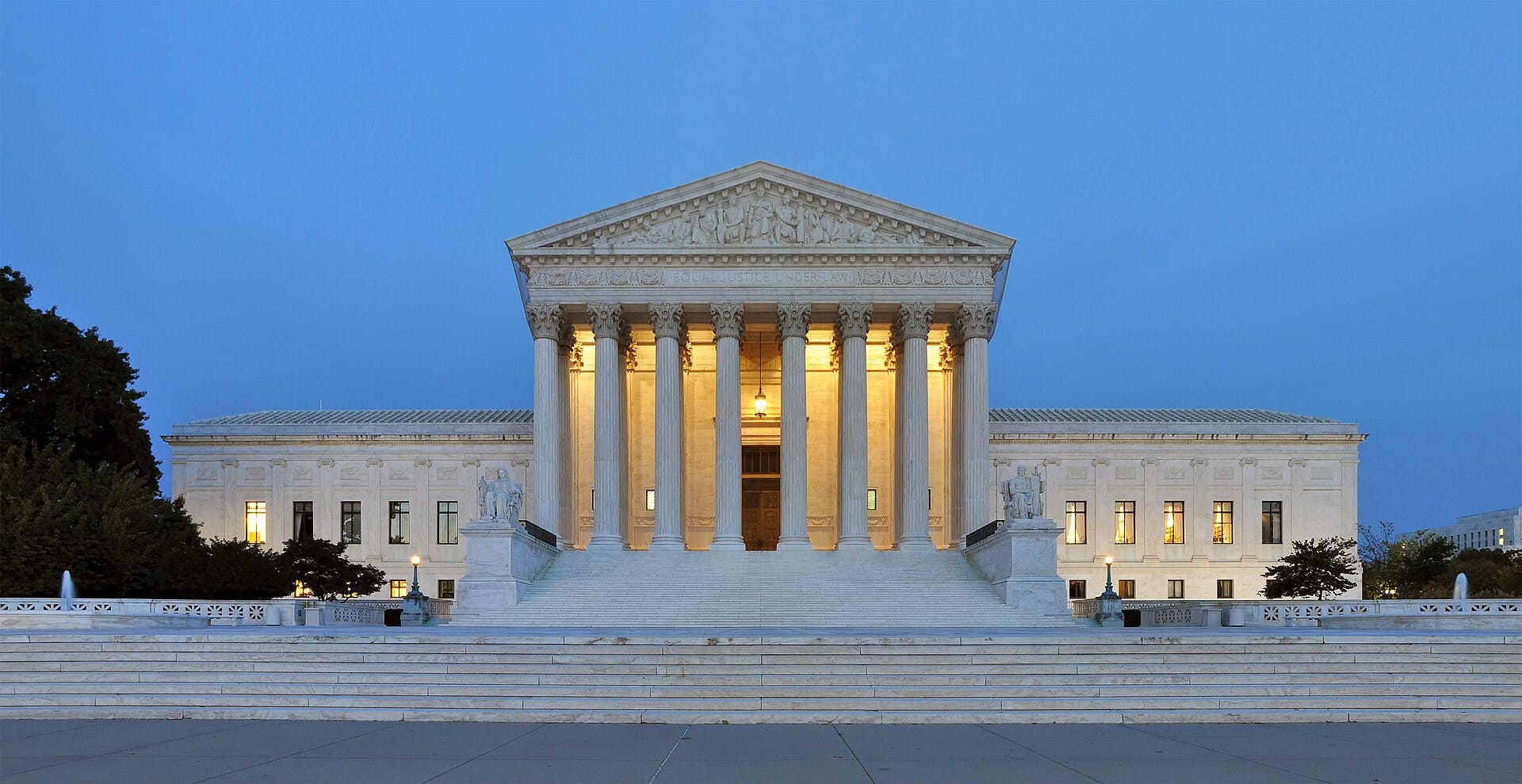
On March 25, 2026, the U.S. Supreme Court decided Cox Communications v. Sony Music Entertainment.
(Correction to the dossier: one page of it puts this ruling in April 2026 and another says March. The correct date is March 25, 2026. The Court’s formal judgment issued on April 27, which may explain the confusion.)
The record labels had won a billion-dollar verdict against Cox, an internet provider, on the theory that Cox kept serving subscribers it knew were pirating music. The Supreme Court threw it out. Justice Clarence Thomas wrote for seven justices. Justices Sotomayor and Jackson agreed with the result on different reasoning. Nobody dissented.
The line that matters most for Megaupload:
“Under our precedents, a company is not liable as a copyright infringer for merely providing a service to the general public with knowledge that it will be used by some to infringe copyrights.”
The Court said contributory liability requires intent, shown one of two ways: the company actively induced the infringement, or it sold a service tailored to infringement. Knowing that some customers break the law isn’t enough. Failing to cut them off isn’t enough.
Now put that next to what Megaupload actually did. Its terms banned infringement, and it ran a public form for reporting illegal files. Kim puts the rest plainly:
“Megaupload was a storage service. Users, not the company and not I, were responsible for uploads. The US Supreme Court has now ruled unanimously that knowing about piracy and failing to cut off accounts is not enough. Liability requires intent. Megaupload banned infringement in its terms, made users accept those terms with every upload, kept a designated takedown agent, and gave more than 150 rights holders, including every major Hollywood studio, direct delete access to our servers.”
Careful is how we win, so here’s the caveat. Cox was a civil case about an internet provider, and it doesn’t automatically end a criminal indictment. Prosecutors will say Megaupload did more than Cox did. But if knowledge isn’t enough, they have to prove intent: that a company which handed Hollywood the delete key was secretly built to rob Hollywood. That’s a much harder sell in 2026 than it was in a 2012 press release.
Two words in New Zealand law: “without more”
This is where Cox becomes a New Zealand story.
Section 92B of New Zealand’s Copyright Act is a safe harbour. It says that an internet service provider, merely because a user uses its services to infringe copyright, “without more,” “must not be subject to any civil remedy or criminal sanction.” Criminal sanction. It’s right there in the statute.
In 2020, New Zealand’s Supreme Court accepted that Megaupload was an internet service provider. Then it held the safe harbour didn’t apply, because the alleged conduct went beyond simply providing the service. In the Court’s view there was “something more”: the rewards programme and the overall business model. That reasoning leaned on the American Grokster line of cases.
Two things jump out.
First, “without more” isn’t defined anywhere in the Act. It’s ordinary language the courts read in context. So it’s entirely reasonable that Megaupload’s operators believed they were protected in New Zealand. The law was written to protect exactly the kind of service they said they ran.
Second, the U.S. Supreme Court has now told us what the American case law actually requires: inducement, or a service tailored to infringement. Kim’s team argues it’s reasonable to revisit the New Zealand finding in light of Cox. I agree.
Here’s why it matters. Extradition requires “dual criminality”: the conduct has to be a crime in both countries. If the safe harbour applies, then on the pure copyright counts the conduct isn’t criminal in New Zealand, and the dual-criminality basis for sending Kim to America on those counts is seriously weakened.
The spy agency that broke the law
This part isn’t Kim’s opinion. The government admitted it.
New Zealand’s Government Communications Security Bureau (GCSB), our signals intelligence agency and the Five Eyes partner of America’s NSA, intercepted Kim’s communications in the lead-up to the raid. That was illegal. As a resident, Kim was a protected person whom the GCSB had no lawful authority to spy on. Inspector-General Paul Neazor’s 2012 report found the bureau got the law wrong.
On 27 September 2012, then–Prime Minister John Key apologized publicly to Kim and to New Zealanders, blaming “basic errors.” Key has always said he knew nothing of the spying until that September. Kim calls that claim unbelievable, and to this day he hasn’t accepted it.
Then there are the warrants. In June 2012, High Court Justice Helen Winkelmann held the search warrants used in the raid invalid, as overly broad general warrants, and found that sending clones of the seized hard drives to the FBI in the United States was unlawful. The Court of Appeal later reversed her on the warrants, and in 2014 a Supreme Court majority upheld them. But the export of the cloned data to the FBI stayed unlawful, and so did the GCSB interception.
Read that again: the people building this case broke New Zealand law at least twice, on the record, and the case rolled on anyway.
And the GCSB’s habits didn’t stop there. In March 2024, Inspector-General Brendan Horsley reported that the GCSB had hosted a signals intelligence system controlled by a foreign partner agency, which could support foreign military operations, from 2013 until 2020, without ever telling its minister. The Inspector-General found the hosting fell within a broad 2012 authorisation and was technically lawful, but that it was “improper” to keep the minister in the dark. He also found the bureau’s own senior leadership had lost track of the system until it was rediscovered in 2020.
That report isn’t about Kim. It’s about the agency that spied on him. When a spy bureau runs a foreign system on its own soil for seven years and its minister doesn’t know, “basic errors” stops sounding like an accident and starts sounding like a culture.

The judges
This is where Kim’s opinions are strongest, so I’ll keep what’s on the record apart from what’s his view.
The expert who stepped aside. The original extradition judge was District Court Judge David Harvey, one of New Zealand’s leading authorities on internet and IT law, a man who had worked on court technology since about 1990. In July 2012, speaking at the NetHui conference about U.S. copyright rules, DVD region-coding and the Trans-Pacific Partnership, he said: “We have met the enemy and he is US.” It was a play on the old Pogo line. It wasn’t about Kim. But the headlines wrote themselves, and Harvey stepped off the case. Judge Nevin Dawson replaced him.
Kim’s take, in the dossier: “Judge David Harvey was right about the enemy. I bet he saw the indictment and couldn’t believe his eyes.”
The replacement. In April 2010, while Judge Dawson was serving as Vanuatu’s coroner, New Zealand officials flew him and his family home for their safety after threats over a report critical of local security forces. Then–Foreign Minister Murray McCully of the National Party confirmed the arrangement. Dawson was back at work in Port Vila within weeks. Kim believes that history left the judge conflicted: “Judge Nevin Dawson was conflicted in my opinion and should never have been the extradition Judge in the Megaupload case.” He also says Dawson required no government disclosure when an expert raised the possible use of a “Stingray” cell-site simulator around his home. That’s Kim’s account and opinion. Weigh it yourself.
The Disney question. In Virginia, the case sat for a decade with U.S. District Judge Liam O’Grady. In May 2022 it was reassigned to Judge Anthony Trenga. The docket gave no reason. Kim’s account, reported at the time, is that his team complained after discovering O’Grady’s household held Disney stock, and Disney is both a plaintiff in the studios’ civil case and a named victim in the criminal one. Separately, the Wall Street Journal had reported in 2021 that O’Grady handled more than 60 cases involving companies listed on his financial disclosure forms. Federal judges aren’t supposed to sit on cases where they have a financial stake. Draw your own conclusions about the timing.
“A setup.” Both O’Grady and Trenga served on the Foreign Intelligence Surveillance Court, the secret court that approves U.S. surveillance warrants. Trenga was its presiding judge from 2023 until this May. Kim argues that O’Grady was effectively chosen by the Justice Department because he was the duty judge when the case was filed, and in the dossier he says: “In my humble opinion this looks like a setup from the beginning.”
(Precision note: the dossier implies O’Grady was already a FISA judge when he got the case. Court records show his FISA term ran from August 2020 to July 2023, years after the 2012 indictment. Trenga’s ran from May 2020 to May 2026. The national-security link is real; the timing is later than the dossier suggests.)
Kim also writes that he has “no expectation of getting a fair trial” before his current judge. And he claims the Eastern District of Virginia jury pool, drawn from an area full of intelligence and defence workers, is stacked against defendants in cases the government cares about. Those are his claims. He hasn’t published evidence for the jury allegation, and I won’t present it as fact. But it’s no secret that the government brings its most important national-security and cyber cases in that district.
Hollywood had the access. The calendar is public.
None of what follows proves anyone ordered anything. It proves who was in the room.
July 2011. White House visitor logs show Vice President Joe Biden met senior executives from Warner Bros., Paramount, Sony, Universal and Disney, along with MPAA chief Chris Dodd and Mike Ellis of the Motion Picture Association’s Asia-Pacific arm. The dossier dates this meeting to July 27, 2011 and describes the agenda as intellectual property enforcement and opening China to more U.S. films.
December 9, 2011. Visitor logs show President Obama hosted Chris Dodd for a private lunch in the Oval Office, roughly two and a half hours long. That’s about six weeks before the raid. The logs don’t tell us what was discussed.
January 19, 2012. The day before the raid, as the SOPA anti-piracy bill was collapsing, Dodd went on Fox News and warned politicians who count on Hollywood money that “this industry is watching very carefully who’s going to stand up for them.”
January 20, 2012. The raid.
October 2012. At a private dinner in Los Angeles hosted by James Cameron and Jon Landau, during John Key’s trip to sell New Zealand as a film location, Dodd raised the Megaupload case with the Prime Minister. Key said it came up “in passing.” (Correction: the dossier dates this dinner to October 4. Contemporary New Zealand reports, filed across the date line, described it as “last night” in a story published on October 5, New Zealand time. So it may have been October 3 in Los Angeles. Either way, it happened, and Dodd raised it.)
Then there’s the prosecutor. Neil MacBride, the U.S. Attorney for the Eastern District of Virginia who brought the Megaupload indictment, had been chief counsel to then-Senator Joe Biden on the Senate Judiciary Committee, and before becoming U.S. Attorney he was Vice President for Anti-Piracy and General Counsel at the Business Software Alliance, the software industry’s anti-piracy trade group. He later served as General Counsel of the U.S. Treasury under President Biden. Biden has denied any involvement in the Megaupload arrests.
Kim’s comment on MacBride’s résumé is five words long: “Do I need to say more?”
Dodd, for his part, served alongside Biden in the Senate for decades, and Biden has called him one of his best friends.
As I wrote in Part 4: Hollywood’s vendetta isn’t a vibe. It’s the origin story.
The sentencing gap that should shock anyone
Kim’s two co-defendants, Mathias Ortmann and Bram van der Kolk, took a deal in 2022. The U.S. dropped its extradition request against them, they pleaded guilty in New Zealand, and they agreed to be available to testify against Kim.
On 15 June 2023, the High Court in Auckland sentenced Ortmann to two years and seven months and van der Kolk to two years and six months. They were released on parole in July 2024 after serving about 13 months.
(Correction: the dossier and our earlier post said they “served 10 months.” Ten months was when they first became eligible for parole, according to Kim’s legal team in 2023. Parole Board records reported by the NZ Herald show they actually served about 13 months.)
Now compare that with what Kim faces. An expert report commissioned for the Justice Minister put the likely U.S. range at 30 to 150 years, with no parole in the federal system. Kim’s own estimate is that the equivalent case in New Zealand would carry around 12 years. He calculates the co-defendants’ deal at a “99.55% discount” on the charges they originally faced. That figure is his calculation, but the scale of the gap is real.
Same company. Same alleged conduct. Two men out on parole in New Zealand. One man facing what amounts to a life sentence on the other side of the world.
“Accountability and extradition are not the same thing,” Kim said today. “Any case against me should be tried in New Zealand, under New Zealand law.”
The Court of Appeal’s answer this July was that Kim’s position was different: he hadn’t offered to plead guilty, he was the alleged primary offender, and the U.S. never agreed to withdraw its request. New Zealand has no “forum bar,” no law saying an extradition must yield when the case could be tried here. Maybe that’s the law. It isn’t justice. Kim adds a point the headlines skipped: the co-defendants’ account casting him as “ringleader” made the news, but he says a recording exists of one of them saying the opposite, and he has never been given the material on how that account came about.
Where the case stands today
Here’s the honest status as of today, October 12, 2026:
2020: New Zealand’s Supreme Court held Kim eligible for surrender on the U.S. charges.
12 August 2024: Justice Minister Paul Goldsmith signed the surrender order.
7 November 2024: Kim suffered a serious stroke. It affected his speech, memory and balance, and he spent long stretches in a wheelchair. He has worked hard on his recovery since.
2025: The High Court dismissed his judicial review of the Minister’s decision.
1 July 2026: The Court of Appeal dismissed his appeal, holding that the Minister made no error and that a 30-to-150-year range wouldn’t “shock the conscience” of informed New Zealanders. It also ordered costs with a 50% uplift, after his lawyers sought a last-minute adjournment. That application leaned partly on the Cox ruling and partly on new medical evidence, which was still before the Minister.
Now: Kim’s team said in July it would seek leave to appeal to the Supreme Court of New Zealand. As far as I can find, no leave decision has been made public. That’s the last door in New Zealand.

“What is the government hiding?”
The dossier keeps returning to one theme: Kim has never been allowed to see the whole file.
The information requests. Kim made dozens of requests under the Privacy Act for the information the government held about him. The Crown declared them “vexatious,” on the grounds that he wanted urgent answers for his extradition fight. In 2018, the Human Rights Review Tribunal found that the requests had been unlawfully transferred to the Attorney-General and awarded Kim NZ$90,000 in damages. The High Court reversed that later in 2018. In 2020, the Court of Appeal allowed Kim’s appeal on the key point, holding that urgency alone couldn’t justify how the requests were handled, and sent damages back for reconsideration. Kim says he never received the information he was entitled to. What he did get, he says, were police files about 80% redacted.
(Correction: the dossier says Kim “won in the High Court.” The records I found show the High Court actually ruled against him in 2018, and his wins came at the Tribunal and then the Court of Appeal. The broad point stands: the courts found the government handled his requests unlawfully.)
The Ellis email. I’ll be especially careful here, because this is the one the other side always reaches for. In 2014 an email surfaced, supposedly from Warner Bros. CEO Kevin Tsujihara to the MPA’s Michael Ellis, claiming Key had privately backed the studios’ case against Kim: “VIP treatment and then a one-way ticket to Virginia.” (Correction: the dossier describes it as an email from Ellis to Warner Bros. Every report I found describes it the other way around.) Warner Bros. and the MPAA both called it fabricated. In 2017, New Zealand’s Serious Fraud Office said it was “satisfied that the email was a forgery.” Kim has said he believes it’s real but couldn’t use it at the 2014 Moment of Truth event because it lacked headers and was easy to discredit. I won’t present it as proof, and neither should you. What I will say is that a government with nothing to hide would have answered his information requests lawfully the first time.
In Kim’s words: “The question is: ‘What is the government hiding?’”
The John Key question, as Kim frames it
The dossier includes a section that reads like a thought experiment, and I’m going to treat it that way. Kim asks: if you were to write a conspiracy theory, how could John Key have benefited from the Megaupload case? The hypothetical answers are goodwill with Hollywood while New Zealand was courting film investment, a stronger Five Eyes relationship, a “tough on piracy” image, cover for expanding GCSB powers, and doors opened for a post-politics career.
To be crystal clear: that is Kim’s hypothetical and his opinion, not an established fact, and I’m not presenting it as one. There’s no public evidence that Key acted in the Megaupload case for personal gain.
The one public fact underneath it is this: since April 2019, Sir John Key has sat on the board of Palo Alto Networks, an American cybersecurity company that sells to U.S. government agencies, and like other directors he’s been paid largely in company stock. The dossier puts figures on that stock. I haven’t independently verified them, so I’m not repeating them. Readers can look up the company’s SEC filings and judge for themselves.
What this piece leaves out, and why
Kim’s dossier ranges well beyond Megaupload: U.S. foreign policy, Russia, COVID-19, WikiLeaks and a message to President Trump. Those are his views, and some are worth their own conversation. But they aren’t the case, and I won’t let anyone use them to change the subject. This piece is about one question: should a nearly fifteen-year-old indictment, built on a liability theory the U.S. Supreme Court just narrowed and tainted by admitted illegality, still be dragging a stroke survivor toward a Virginia courtroom?
What I’m asking you to do
This isn’t a fandom. It’s a due-process test.
Read the record, not the 2012 press release. Start with Cox v. Sony, the 2012 Neazor report on the GCSB, and the Court of Appeal’s July 2026 decision.
Share this beyond your usual circle. You don’t have to agree with Kim on anything else to agree that fifteen years without a trial is enough.
Put it in front of the people who can still stop it. In Wellington: the Prime Minister and the Minister of Justice. In Washington: the Attorney General, the White House Counsel and the Office of the Pardon Attorney. A dismissal, a declination or a pardon would end this.
Tell New Zealand’s MPs that this case belongs in a New Zealand court, under New Zealand law, including the safe harbour Parliament wrote.
Pray for Kim if that’s your language. His body has already paid a price no court ever imposed.
Kim has said he’ll talk to anyone, anywhere. His words: “Anytime. Anywhere.” If you host a show or a podcast, take him up on it.

Kim Dotcom is a test of whether two democracies can admit that a prosecution born in a lobby, fed by unlawful surveillance, and undercut by America’s own highest court should end in an office, not a prison.
I sat with him. I’m still standing with him. I won’t look away.
If you value independent reporting that answers to readers and not sponsors, subscribe to George News. It’s free, and paid subscriptions keep us ad-free.
Join us on Telegram at t.me/georgenews and follow us on X at @georgenews. Share this piece. That’s how it gets past the people who’d rather you never read it.
Stay vigilant.
— George
Reported facts above are attributed to the court records, official reports and outlets listed in our sources. Statements identified as Kim Dotcom’s opinions or claims are his. The U.S. Department of Justice, Sir John Key and others named are welcome to respond, and we’ll publish any response.