


We’ve all heard the passionate arguments about “ancestral rights” to the land of Israel. But apply that same logic to the genetic empire of the greatest conqueror in history, and suddenly billions of us could stake a claim to half of Asia. Time to rethink how we weaponize heritage in endless conflicts.
In the heated debates surrounding ancestral rights, historical claims, and who truly “belongs” on a piece of land, the conversation often boils down to this: “Our ancestors were here first—or longest—or suffered the most.” It’s a narrative that fuels identity, justifies policies, and sadly, perpetuates conflict. Nowhere is this more intense than in the land once called Judea, now the State of Israel—a place where Jewish people point to 3,000+ years of biblical, archaeological, and continuous (even if minority) presence; where Palestinians trace roots to ancient Canaanites, Arab conquests, and centuries under Ottoman and British rule; and where both sides invoke exile, persecution, survival, and divine/historical promise.
But what happens when we take that exact same ancestral logic and apply it universally, without exception? What if we followed the bloodlines to their most explosive conclusions?
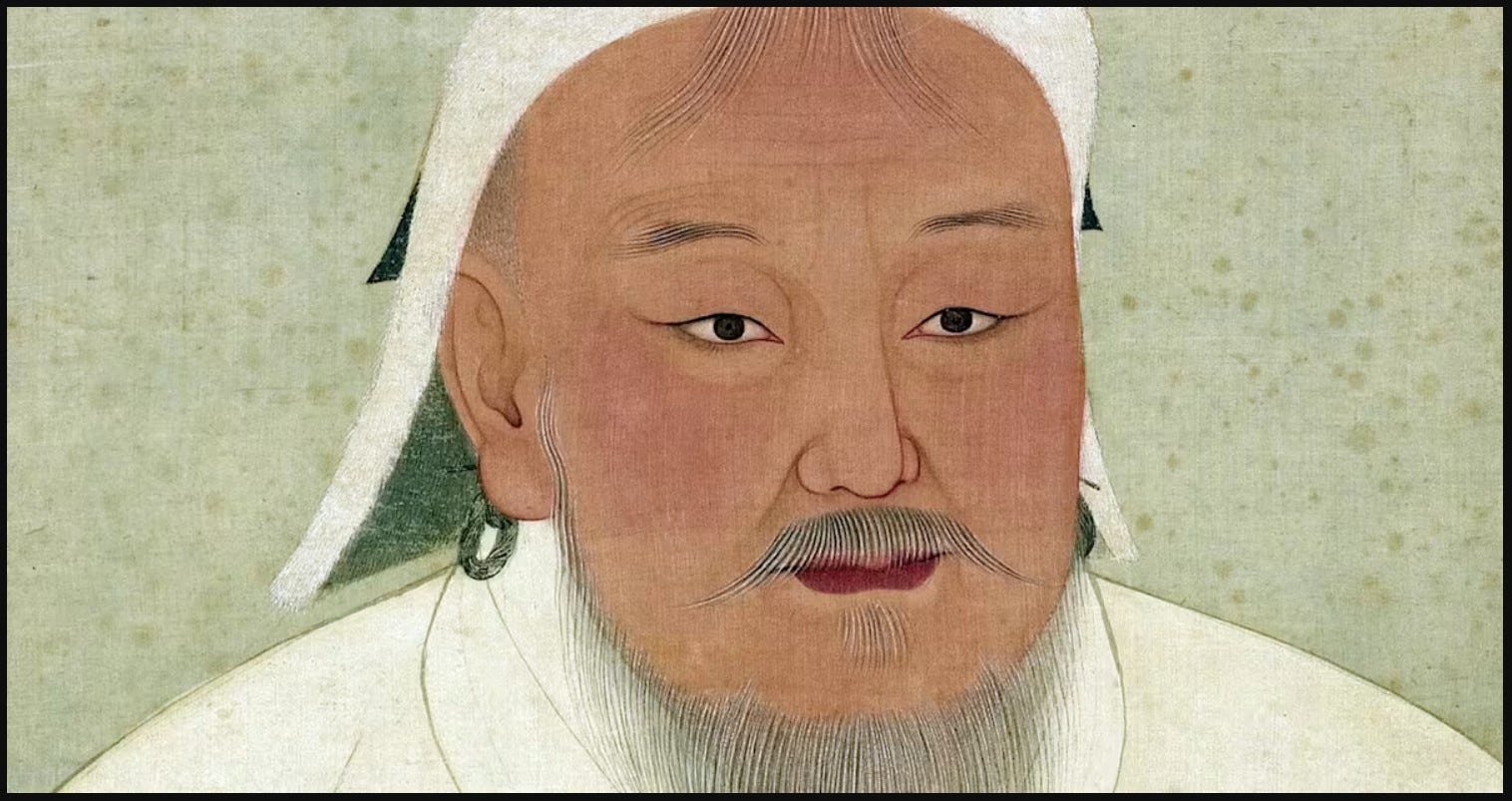
Enter Genghis Khan.
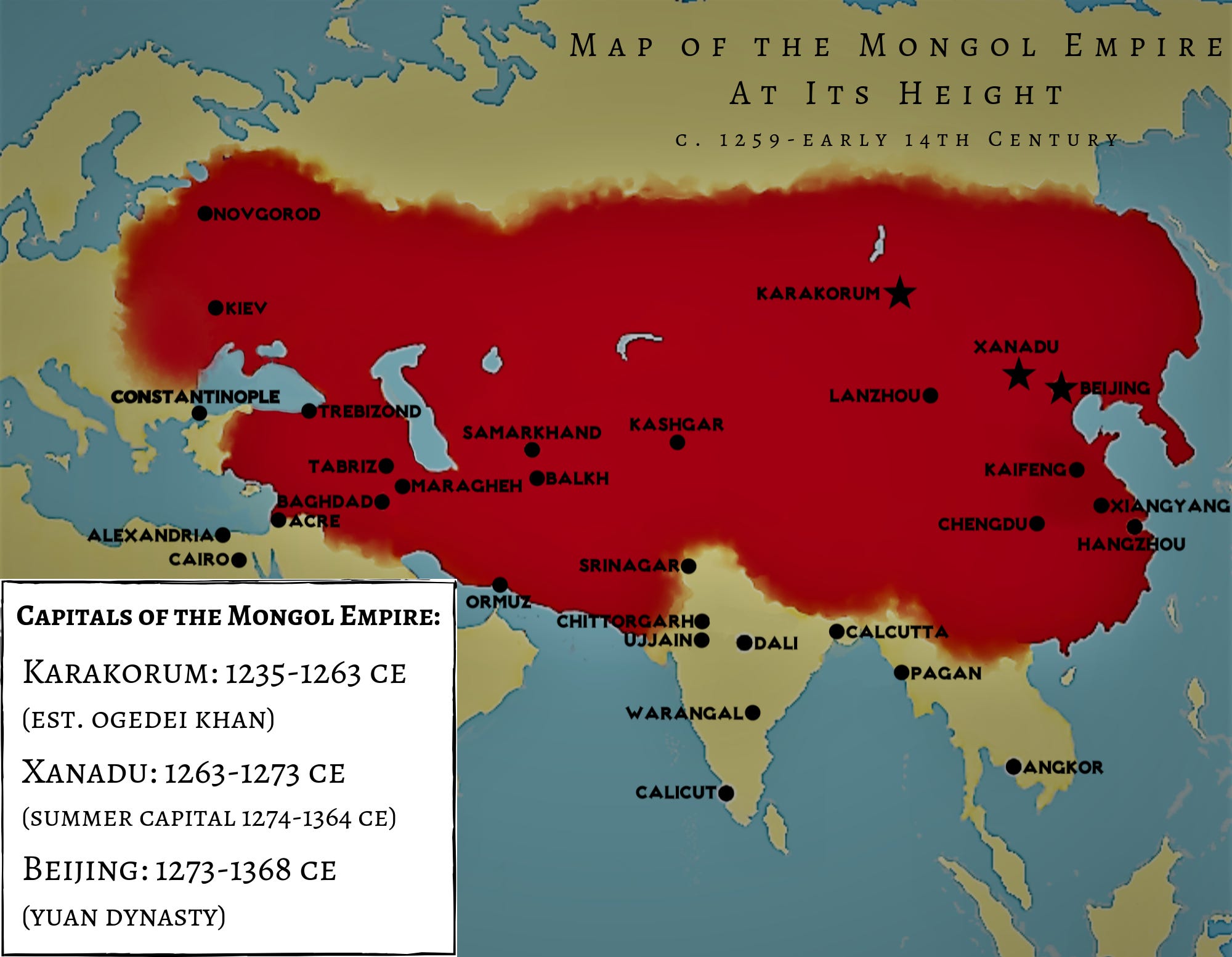
The Mongol conqueror (born Temüjin ~1162) didn’t just build the largest contiguous land empire in human history—he left a genetic legacy that dwarfs most others. From the Pacific to the Caspian Sea, his armies swept across modern China, Mongolia, Central Asia, Russia, the Middle East, and into Eastern Europe. His sons, grandsons (like Kublai Khan of Yuan Dynasty fame), and descendants ruled empires for centuries, often through strategic marriages, vast harems, and integration of conquered populations.
A 2003 study in the American Journal of Human Genetics dropped a bombshell:
A specific Y-chromosome lineage, traced to Genghis Khan and his close male relatives, is carried by about 0.5% of the world’s male population—roughly 16 million men at the time (likely higher now with population growth). When including broader descent (mitochondrial lines, autosomal DNA), estimates suggest 1 in 200 people alive today—around 40 million globally—carry some genetic connection to the Great Khan. That’s not folklore; it’s peer-reviewed DNA evidence spanning Asia, Europe, and beyond.
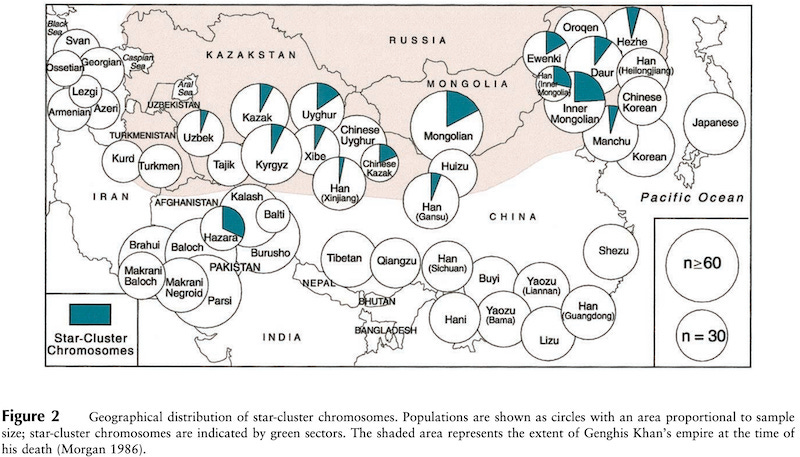
Why the explosion? Genghis and his lineage fathered enormous numbers of children. Historical records (Persian chronicler Ata-Malik Juvaini and others) describe thousands of direct descendants living in privilege by the mid-13th century. The Mongol policy of rewarding loyalty with marriage alliances and concubinage spread those genes far and wide. Today, that signature appears strongly in Kazakhstan, Uzbekistan, northern China, Pakistan—and traces reach into Eastern Europe and the Middle East.
So here’s the provocative question: If “ancestral rights” are determined by blood ties and historical dominion, don’t millions (perhaps billions, if we go back far enough) have a legitimate claim to Mongolia—the Khan’s homeland—or vast regions of China, ruled by his Yuan Dynasty successors? Could descendants pitch a tent in the Gobi, demand land in Inner Mongolia, or file a historical grievance over Beijing’s Forbidden City?
Of course that sounds ridiculous. We’d dismiss it as absurd. Yet it’s the mirror image of absolutist ancestral arguments elsewhere.
This isn’t to equate situations—Israel’s secular creation in 1948 came after millennia of diaspora, repeated exiles, the Holocaust’s near-annihilation of European Jewry, and international recognition via the UN Partition Plan and Balfour Declaration. Jewish ties to the land are etched in archaeology (Dead Sea Scrolls, ancient synagogues), texts, and unbroken (if diminished) presence. Of course, that’s if the DNA matches.
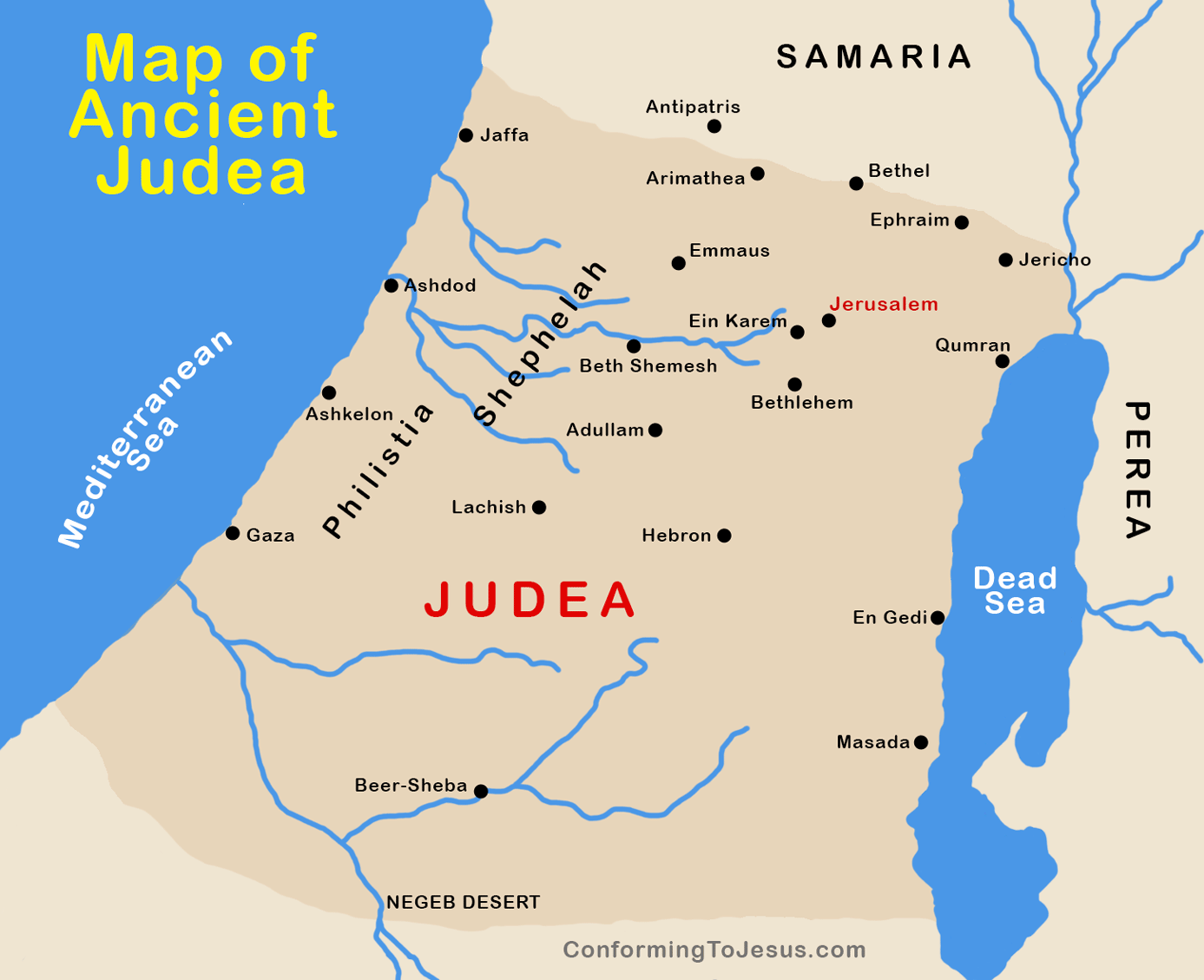
Palestinian roots run deep—families tied to villages for generations, with ancestry blending Canaanite, Arab, and other layers.
But the Genghis Khan parallel exposes the slippery slope. If DNA + ancient presence = unbreakable claim, then where do we stop? Charlemagne’s descendants (millions of Europeans) could claim France, Germany, Italy. Niall of the Nine Hostages’ Y-lineage entitles many Irish to royal status. The Lemba in Africa carry Jewish priestly markers—does that reopen old debates? Go back further: we’re all African migrants from 70,000 years ago. Universal claim to Ethiopia?
Human history is endless migration, conquest, and mixing. Empires rise, fall, and leave genetic echoes. Clinging to ancient bloodlines as the final arbiter of modern sovereignty ignores treaties, self-determination, practicality, and the reality of shared spaces in 2026.
True peace rarely comes from digging deeper into disputed graves—it comes from looking forward. Compromise, two-state frameworks (however imperfect), federations, or economic integration where history informs but doesn’t dictate. Weaponizing heritage risks eternal division in an era of global migration, climate displacement, and interconnected crises.
If your 23andMe lights up with Mongol markers, are you booking a flight to Ulaanbaatar? Or is it time we all evolve beyond ancestral score-settling?
What do you think, subscribers? Does this genetic thought experiment change how you view land claims anywhere? Drop your takes below—civil discussion encouraged. And if you’ve got your own DNA surprise story, share it.
Good points! One key you hit upon was if your DNA matches... many of the so-called Jews in Israel are not from that area of the world at all... they are Kazars from Eurasia. Second, Lord Balfour had no business "giving" that land to the Rothschilds. Third, the Israelis have committed genocide against the Palestinians. All a bad deal that needs to be rectified ASAP.